Agricultural productivity
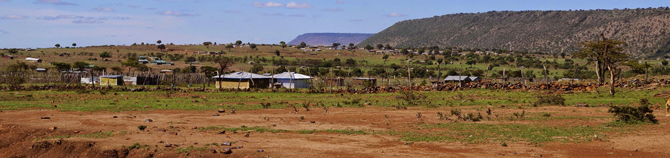
Productivity of agricultural systems compared with natural ecosystems
Professor, Jørgen E. Olesen, Dept. of Agroecology , Aarhus University
Humans are increasingly using the landscape for their own purposes, and with the increasing population this often leads to expansion of agricultural systems into natural ecosystems. One of the reasons of the expansion is that many of the agricultural systems are inefficient in providing sufficient production, i.e. a too large area is needed for the provision of food and other goods. The current management of the primary productivity of agricultural systems are often lower than those of the natural ones. The too low productivity of agricultural systems is one of the main drivers of the pressure on natural ecosystems.
There is therefore a need to explore how the productivity of agricultural systems compare with those of natural (or semi-natural) ecosystems. The hypothesis would be that net primary productivity (NPP) of agricultural systems is lower than of natural ones. If this is the case there is a need to explore which factors constrain productivity of agricultural systems – to identify whether new more complex agricultural systems or changes in input can enhance NPP. This may also be explore by comparing different regions. The methodology could be use of remote sensing (NDVI) to estimate NPP of different systems and relate these to climatic factors (in particular NPP, temperature and VPD). The variation in NPP corrected for climate would point at systems limited by other factors – and thus for further study with sampling and interviews. Following this first scoping study there would need to be studies on how productivity of the agricultural systems can sustainabily be increased (sustainable intensification).